in depth

biotensegrity:

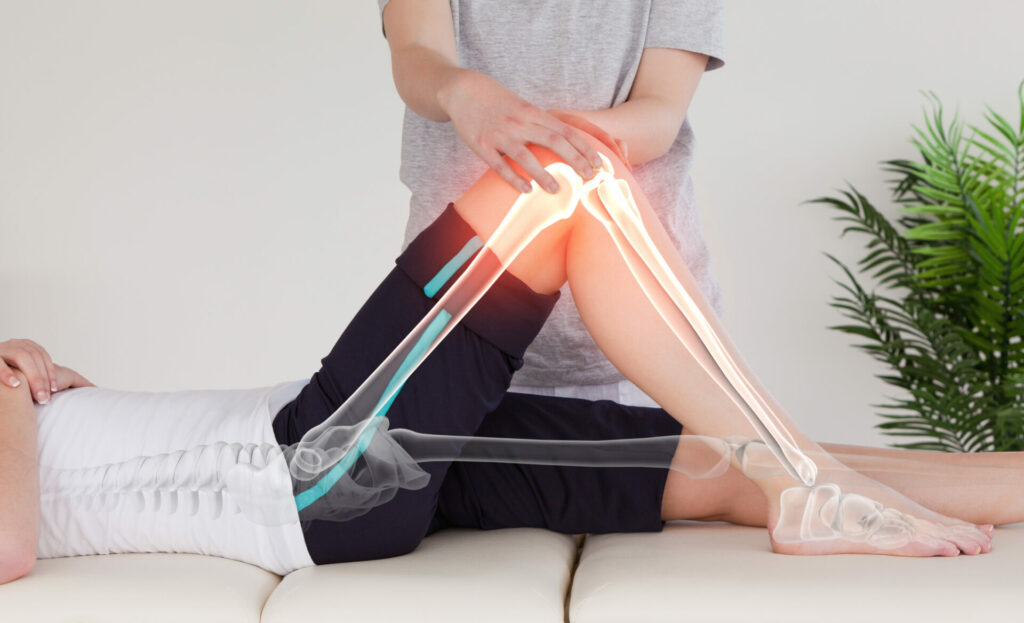
In the modern world, we believe that the science of biotensegrity offers the best description of some of the fundamentals of Amatsu’s approach, and explains how our body structures work together and therefore affect each other when damaged. Our practitioners are taught to understand how an injury or illness within one part of the body will always have a global impact elsewhere within the body.

It was in the 1970s that Dr Stephen Levin first conceived of this ‘Law of Tensegrity’ entitled ‘biotensegrity’. It is with the kind permission of Dr Levin that we reproduce the history and principles of biotensegrity within this website. For further information on his work please see his website http://www.biotensegrity.com.

Amatsu’s whole body, tensegrous approach helps the body to regain its natural balance and movement by identifying and releasing injuries or distortions, allowing biotensegrity to be re-established within the body.

Dr Levin’s work on biotensegrity started in the mid 1970s, when he was a young orthopaedic surgeon trying to understand what he was doing as a 'body mechanic'. He was taught during his residency training by some of the top biomechanics of the time. Yet the teaching was still based on the application of first year college physics to biologic structures and particularly how it applied to the human frame. This has been, and continues to be, the most widely accepted explanation of the mechanics of body movement. It was first described by Giovanni Borelli (an Italian mathematician, physiologist, physicist and 'renaissance man') in 1680 in his publications De Motu Animalium I and De Motu Animalium II, and in essence it has changed little since then. These theories are all based on Newtonian mechanics as they would be applied to a column or building built with rigid materials and standing in one place on solid ground. 

However, humans, and indeed all biologic structures, are mobile, omni directional, gravity independent structures built of 'soft materials', foams, colloids and emulsions, (bone and wood are stiff foams, like Styrofoam.) Therefore Dr Levin concluded that the mechanical laws as applied to these structures may be different.

In the mid 1970s Dr. Levin lived outside of Washington, DC, and he went to study the dinosaurs at the Smithsonian's Natural History Museum in his search for answers. He just could not accept the standard Borellian model but he could not find another suitable model. Sitting on the mall in front of the museum, he looked across and remembered the Needle Tower, a Kenneth Snelson sculpture2 right across the mall at the Hirshhorn Museum and so began the rest of the story of the evolution of biotensegrity.

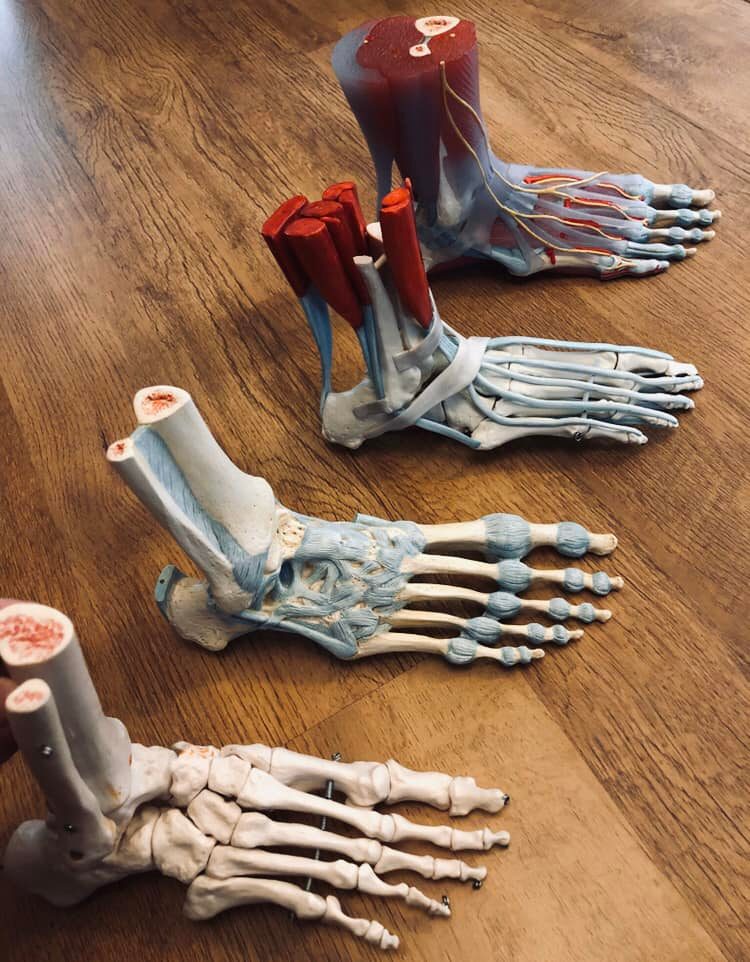
The word tensegrity is a combination of the words tension and integrity; wholeness based on a balance between tension and compression. The concept in brief is that the human body is a living, tensegrous structure that is self supporting. There are no shears, bending moments or levers, just simple tension and compression in a self organising, hierarchical, load distributing and low energy consuming structure. Tensegrities are closed systems in that they are structurally independent of outside forces. Within the body the soft tissues provide the tension whilst the bones provide the compression.3

The natural biotensegrity of a person can be compromised by injury, illness and many lifestyle related factors which, in turn, impacts on the balance within the body. For example, we can compare the body’s structure to a bicycle wheel. If one of the wheel’s spokes becomes distorted or bent by running into a kerb, the entire wheel structure changes and its natural tensegrity is lost. Therefore the specific damage to the wheel’s spoke not only has an effect at that place, but has also impacted the entire wheel’s function. Based on these principles every injury will not only have a local and specific impact within the body, but also a global impact. 

For example, if a person simply twists their ankle by turning it over onto the outside then they may stretch (or possibly tear) the ligaments in the ankle. This inherent change in the shape of these ligaments will affect the shape of the whole leg, which will then also have an effect on the position of their pelvis and spine and then their entire body structure. This adaptation of the pelvis will then also change the walking posture of the person, the shape of the ribcage and the balance of the shoulders amongst many other things. Therefore, a simple ankle sprain can irritate or affect an existing vulnerability or old injury elsewhere in the body, or create a new condition, which may not be obviously directly related to a sprained ankle.

 Amatsu’s breakthrough in the west began in 1986 when Dennis Bartram first discovered Dr Hatsumi’s work and then in 1995 when Dennis, William Doolan and Christopher Roworth made history as the first non-Japanese therapists to be taught the ancient healing principles of the Tatara by Dr Hatsumi. They were all granted Menkyo Kaiden (full teaching rights) of the ancient school as a result of Dennis Bartram’s personal work and research.  These teachings are now underpinned within a western scientific framework and are available today as Amatsu therapy, which is taught by ATA approved schools. For further information on Dennis please see dennis bartram. 

1. Dr.Stephen Levin’s research into biotensegrity explains these principles further.  To find out more please visit www.biotensegrity.com
2.
See Kenneth Snelson, Forces made visible.
3.
Dr. Stephen Levin, Live lecture April 1, 2005
Some of the information in this section is reproduced from Stephen Levin’s website with his kind permission.

the techniques

proprioception

natural body movement

Back to top
find a practitioner

Select your location below to find your nearest practitioner

  •   
talk to us

If you have a question or would like to find out more about us please contact us